
Coptic Egyptian Wedding Traditions
A sacred union of faith, family, and tradition.
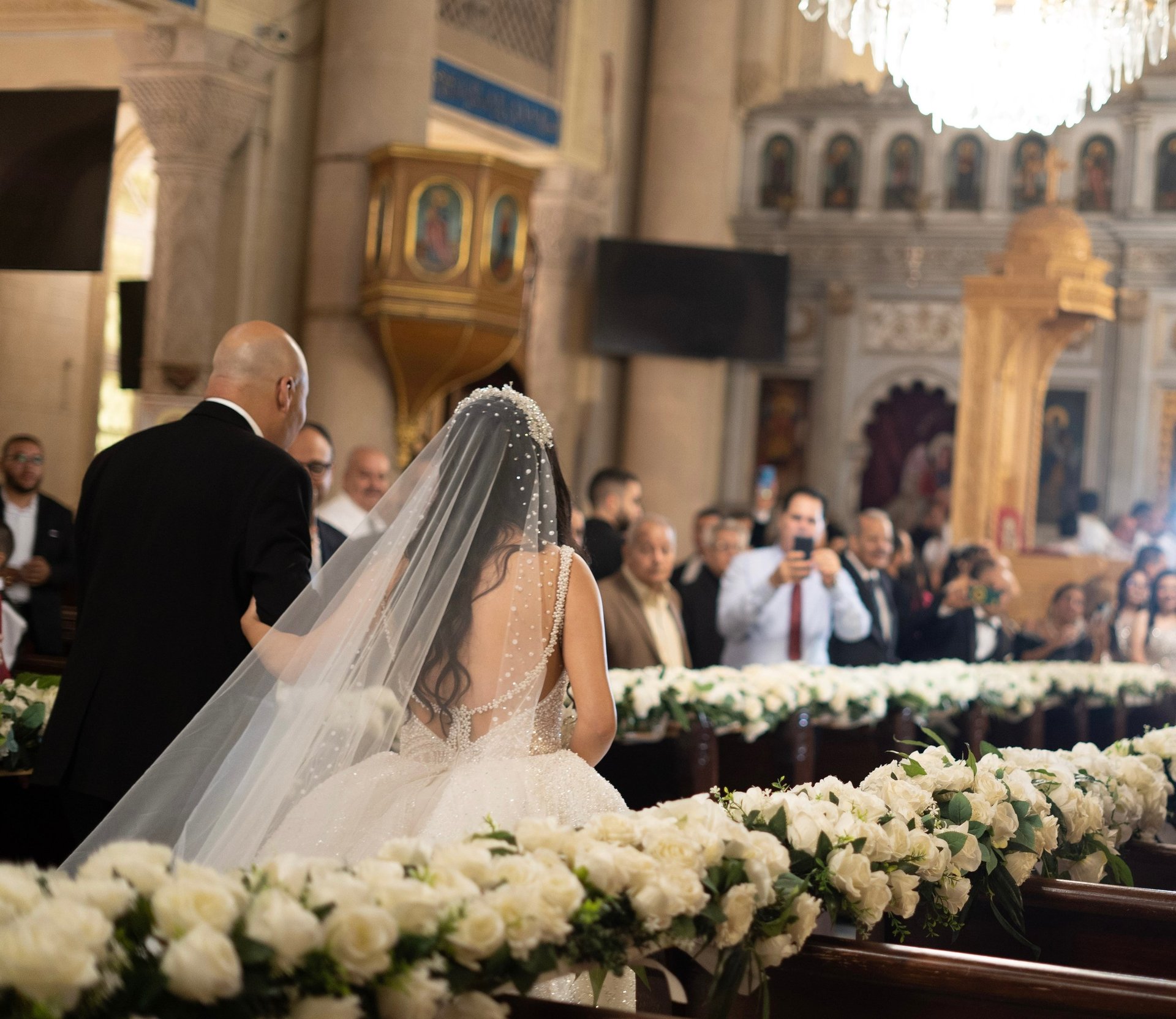
Faith, Family, and Tradition: Inside a Coptic Wedding
Coptic weddings are rich with history, symbolism, and community. Rooted in ancient Egyptian and early Christian traditions, they celebrate not only the union of two people, but also the joining of two families under God’s blessing. While modern weddings often include contemporary elements, the spiritual and cultural heart of the Coptic ceremony remains unchanged.
The Church Ceremony (Sacrament of Matrimony)
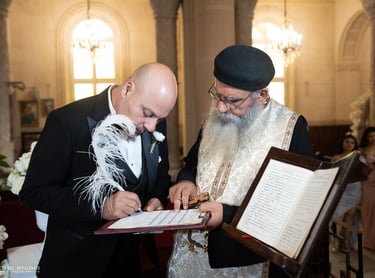
The Coptic Orthodox wedding ceremony is a sacred liturgy known as the Sacrament of Matrimony. It takes place inside the church, often before the altar, symbolizing that the union is blessed and witnessed by God. The priest leads the couple through a series of prayers, readings, and blessings, calling on the Holy Spirit to unite them. He places crowns on the bride and groom’s heads—symbolizing that they are king and queen of their new home, and that marriage is both a blessing and a shared responsibility.
The Rings and Crowns
During the ceremony, the rings are blessed with holy oil and exchanged as symbols of eternal love and fidelity. The crowns, often connected by a white ribbon, represent unity. Traditionally, they’re held above the couple’s heads by the priest or family members.
Procession and Celebration
After the ceremony, the newlyweds walk down the aisle together amid joyful ululations and applause from their families and friends. Many couples then host a large wedding reception featuring music, food, and dancing—often including a traditional Coptic or Egyptian zaffa (musical procession) as they make their grand entrance.
A Coptic wedding is more than a celebration—it’s a sacred covenant rooted in centuries of faith. Every prayer, crown, and ring carries deep meaning, connecting modern couples to generations before them.
Through Veils of Grace, we honor this heritage by supporting brides in Egypt as they begin their own journeys with dignity and joy—surrounded by the same love and blessings that have defined Coptic marriages for generations.
The Reality- For families in poverty, these traditions can make marriage seem out of reach. Even modest weddings require years of saving or borrowing. Some couples delay marriage simply because they cannot afford the essentials needed to start a household.
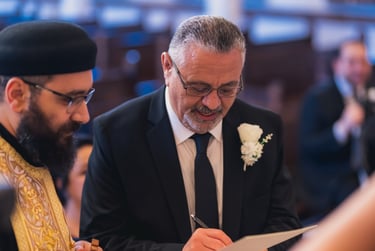
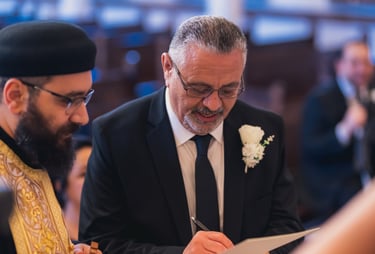
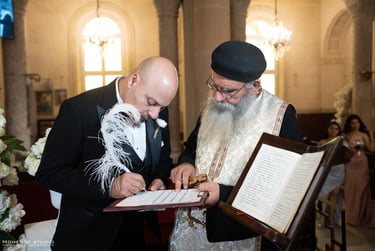
Who Pays What: The Cost of Marriage in local Communities
In many Egyptian communities—especially in lower-income or rural areas—marriage is both a joyful milestone and a major financial challenge. Beyond love and faith, families are expected to meet long-standing social and financial traditions, with each side contributing specific items before the couple can begin their life together. These expectations, though rooted in culture, can become a heavy burden for families with limited means.
The Bride’s Family- Traditionally, the bride’s family furnishes the couple’s new home. This includes furniture, kitchenware, appliances, and household linens.
The Groom’s Family- The groom’s family is usually responsible for securing housing and paying the shabka (gold jewelry). They also cover the wedding celebration costs and may contribute furniture or appliances, depending on local customs.
Supporting brides with dignity and joy.
© 2025. All rights reserved.